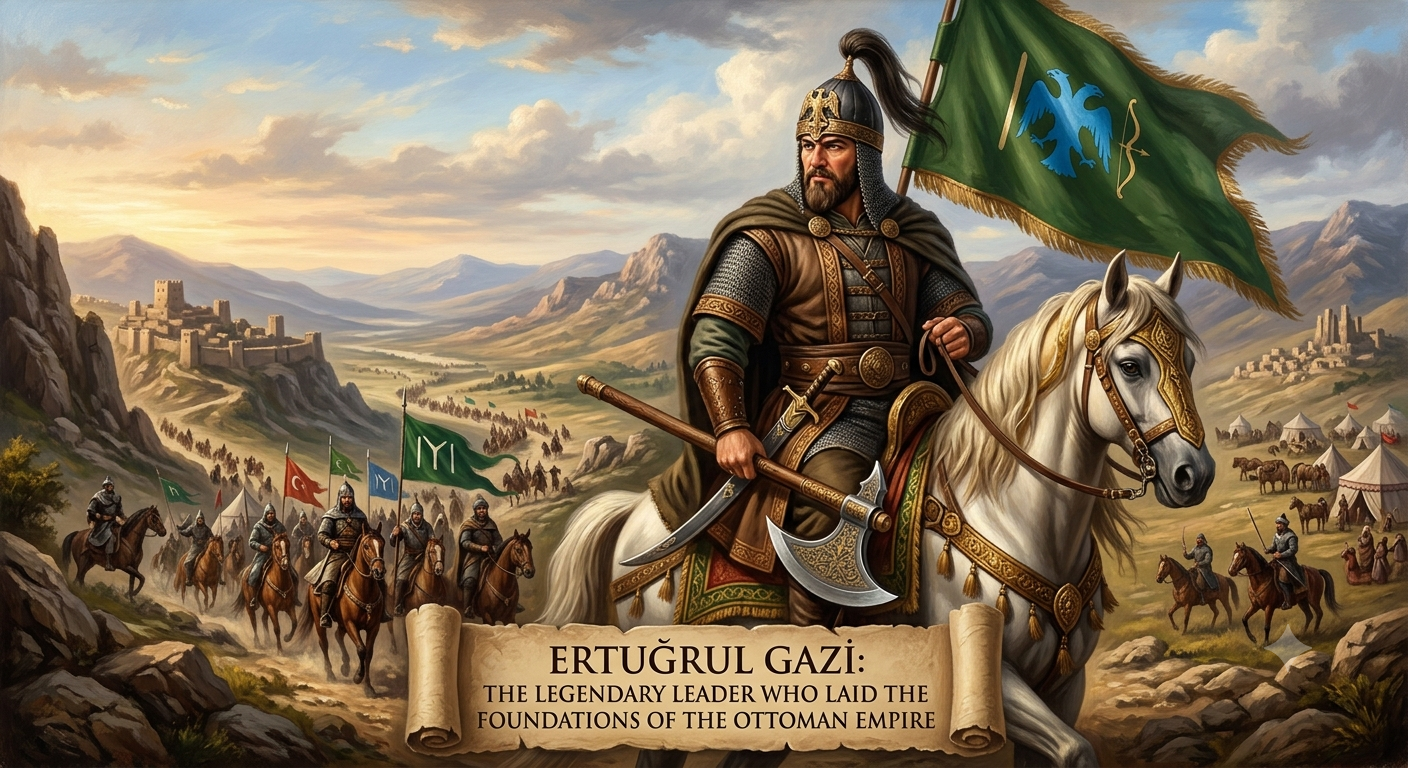
Discover the inspiring life and legacy of Ertuğrul Gazi, the chieftain of the Kayı tribe whose bravery and vision paved the way for the establishment of the Ottoman Empire.
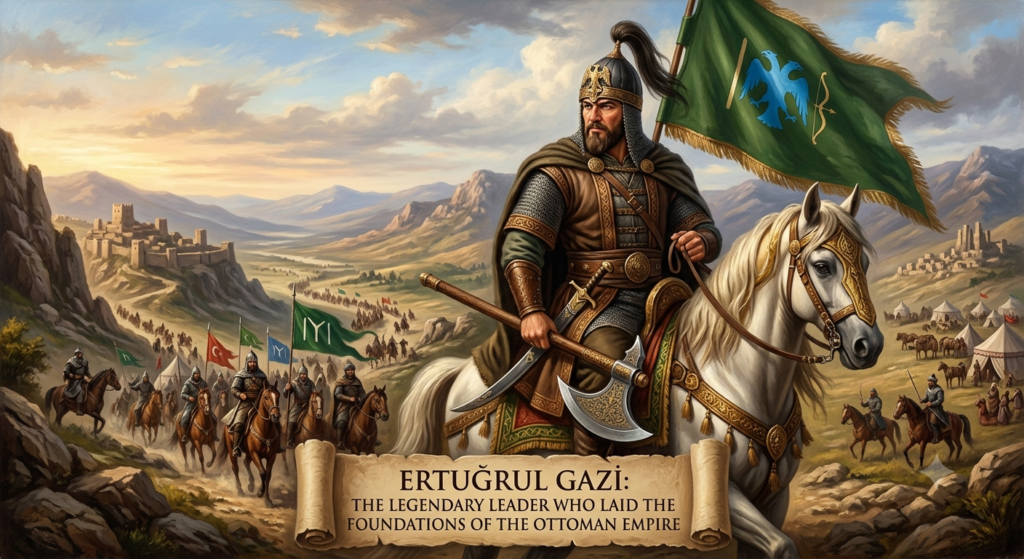
Before the Ottoman Empire became a world-spanning superpower that stretched across three continents, its humble origins began with a small nomadic Turkic tribe searching for a home in Asia Minor (Anatolia). At the center of this incredible origin story stands a legendary chieftain: Ertuğrul Gazi.
While his son, Osman I, would officially declare the founding of the dynasty, it was Ertuğrul’s political foresight, military prowess, and unwavering faith that created the bedrock upon which the empire was built.
The Kayı Tribe and the Turbulent 13th Century
To understand Ertuğrul’s historical significance, one must look at the chaotic geopolitical climate of the 13th century. Anatolia was a battleground caught between decaying superpowers and brutal invaders:
- The Mongol Invasions: The Mongol Empire was sweeping westwards, destroying cities, collapsing kingdoms, and forcing millions of Turkic nomads (Oghuz Turks) to migrate west toward Anatolia.
- The Decline of the Seljuk Sultanate: The Seljuk Sultanate of Rûm, which had long protected Muslims in the region, was severely weakened by internal rivalries and Mongol pressure.
- The Byzantine Empire: Although declining, the Byzantine Empire still held fortified strongholds and rich lands along the western borders of Anatolia.
Amidst this turmoil, Ertuğrul succeeded his father (traditionally identified as Suleyman Shah or Gündüz Alp) as the leader of the Kayı tribe—a branch of the Oghuz Turks known for their martial skill and devotion to Islam.
The Settlement in Söğüt: A Strategic Borderland
Recognizing the need for survival and stability, Ertuğrul aligned his tribe with the Seljuk Sultan, Alaeddin Keykubad I. According to historical tradition, Ertuğrul earned the Sultan’s respect after intervening in a battle between Seljuk forces and a rival army, turning the tide of victory in favor of the Seljuks.
In gratitude, Sultan Alaeddin granted Ertuğrul governance over the territory of Söğüt and the surrounding hills near Domaniç. This grant was not merely a reward; it was a strategic placement:
- The Marcher Lord (Uç Beyi): Söğüt was located directly on the frontier (Uç) border with the Byzantine Empire. As a Marcher Lord, Ertuğrul was tasked with defending the Seljuk border against Byzantine raids.
- Expansion Opportunities: The location allowed Ertuğrul to engage in “Gaza”—faith-inspired frontier warfare against local Byzantine feudal lords (Tekfurs)—expanding Muslim territory without conflicting with neighboring Muslim principalities.
Leadership, Alliances, and Military Strategy
Ertuğrul was not simply a warrior; he was a master diplomat. Operating in a frontier environment required balancing warfare with shrewd political maneuvers.
1. Diplomatic Alliances with Local Tekfurs
Rather than engaging in perpetual conflict, Ertuğrul established trade alliances and peace treaties with neighboring Byzantine rulers when beneficial. This pragmatic diplomacy allowed his small tribe to grow economically and militarily without facing overwhelming opposition.
2. Integration of Nomadic and Sedentary Life
Ertuğrul gradually transitioned his people from a purely nomadic lifestyle toward semi-sedentary governance. Söğüt transformed from a simple camp into a thriving hub for trade, agriculture, and Islamic scholarship.
3. Spiritual Guidance: The Influence of Dervishes
Ertuğrul placed great importance on spiritual guidance, surrounding himself with Islamic scholars, Sufi dervishes, and Alps (warrior-saints). This spiritual ethos cultivated a sense of justice, brotherhood, and moral purpose that became a hallmark of early Ottoman culture.
The Legacy: Passing the Torch to Osman I
Ertuğrul Gazi ruled his territory with justice and wisdom for decades, earning the respect of both his Muslim subjects and local Christian populations. He passed away in Söğüt around 1280 AD at an advanced age, leaving behind a prosperous, well-defended, and highly disciplined frontier state.
Upon his death, his youngest son, Osman I, inherited the leadership of the Kayı tribe. Building directly upon the foundation, alliances, and territory established by his father, Osman would go on to formally declare independence in 1299 AD, founding the Ottoman Dynasty (named Osmanlı after him).
Historical Significance and Modern Memory
Although contemporary written records from the 13th century regarding Ertuğrul are scarce—a period historians refer to as the “Ottoman Black Hole”—his legacy lived on through centuries of Ottoman oral traditions, chronicles, and imperial identity.
- Tomb of Ertuğrul Gazi: His tomb in Söğüt remains a revered historical monument and a symbol of Turkish and Islamic heritage, visited by thousands of pilgrims every year.
- Cultural Impact: In recent years, the historical drama Diriliş: Ertuğrul re-popularized his life story globally, introducing millions of viewers to his vision of justice, courage, and faith.
1 thought on “Ertuğrul Gazi The Legendary Leader Who Laid the Foundations of the Ottoman Empire”