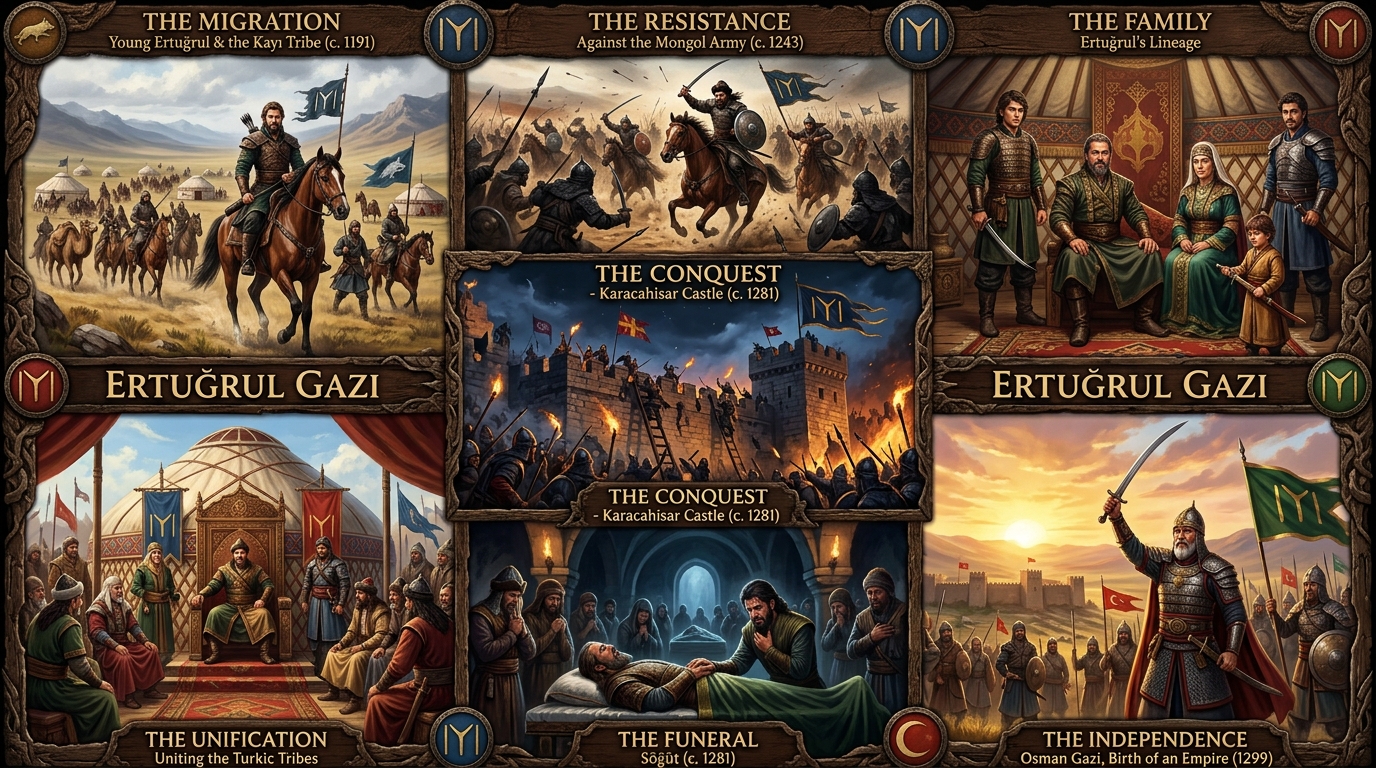
He never saw the empire he started. That is the strange, wonderful truth about Ertugrul Gazi. Today his name is famous around the world, but the man himself died a tribal chief, in a small town, before any empire existed. What he left behind was not an empire. It was a tribe, a grave, a promise, and a son. And that turned out to be enough.
The man behind the legend
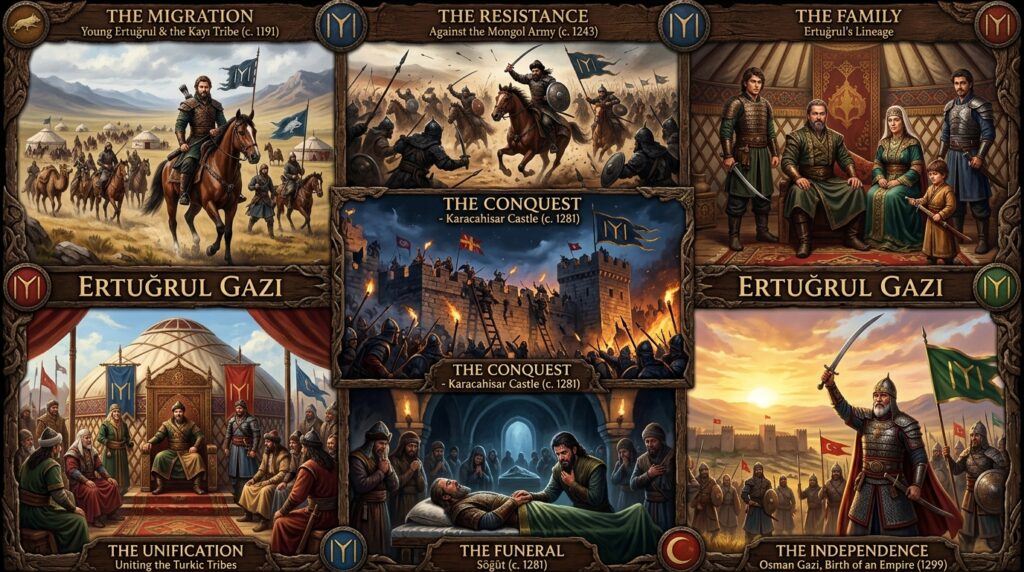
Ertugrul is famous today in a way few medieval chiefs ever are. But the historical record about him is thin. History did not record every detail of his life, and it recorded even less about the people around him. What we know is the frame: he led the Kayi tribe, a small Turkmen group that had come west from Central Asia, into Anatolia, the frontier land between the dying Seljuk Sultanate and the Byzantine Empire. He fought on that frontier for decades. He held the town of Sogut. And around 1281, at about 90 years old, he died.
That is almost all the record gives us. No grand palace, no great battle with his name carved on it, no empire to point at. Just a chief who held a frontier town and kept his people alive through decades of war and hardship.
And yet, from that thin frame came 600 years of history. The question is how.
The wife history almost skipped
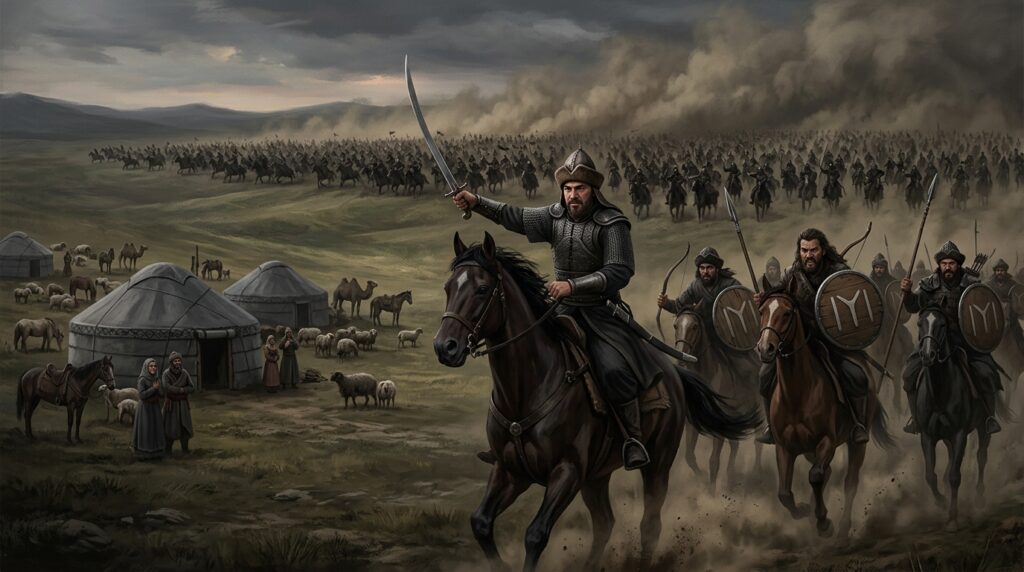
Behind every great man is a great woman. Halime Hatun was real. She was not a drama character made just for entertainment. She was Ertugrul’s real wife, his companion in decades of war, hardship, and conquest.
Although history did not record every detail of her life, we know this: she raised Osman, the person who built the Ottoman Empire. And a woman who raises a world conqueror always deserves to be remembered.
This is the first part of the answer. Ertugrul did not only hold a frontier. He built a household that could produce a founder. The son who watched his father fight, lead, and sacrifice his whole life learned everything at home: the art of war, the wisdom of diplomacy, the importance of unity.
The death that was not an ending
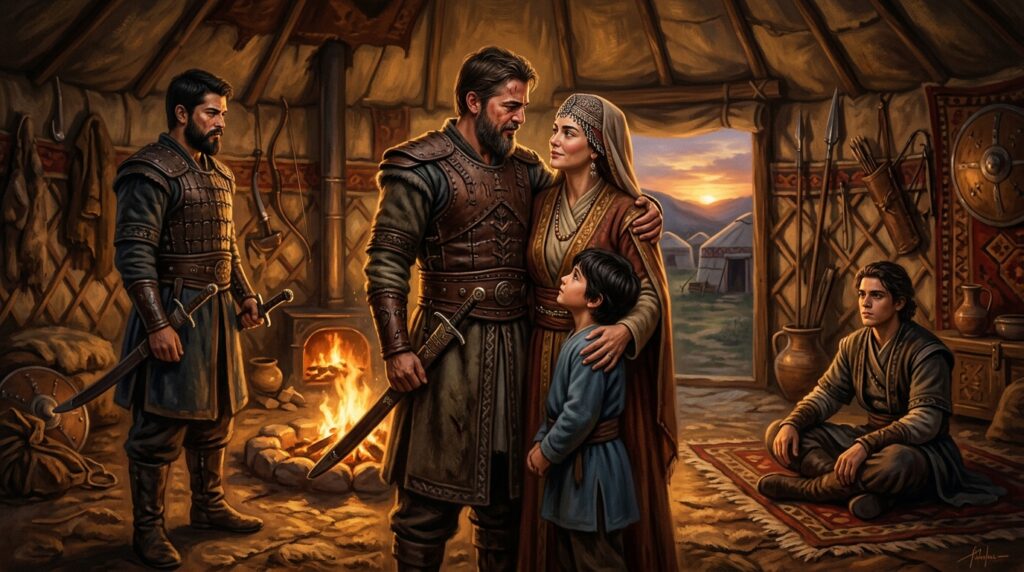
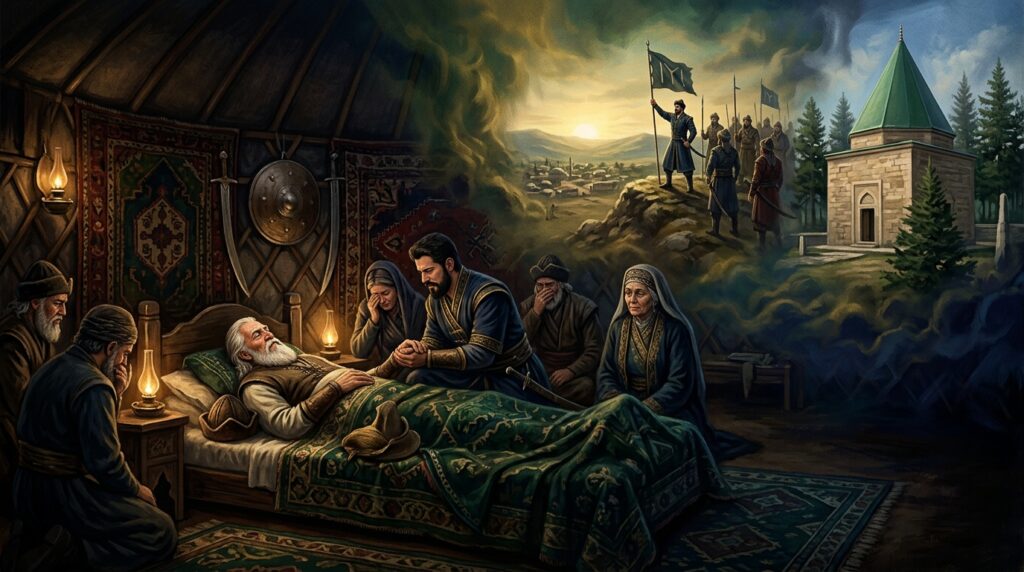
Around 1281, Ertugrul Ghazi took his last breath. He was about 90 years old, a warrior who had fought his whole life, and he did not die on a battlefield. He died peacefully among his family. His son Osman held his hand. His tribe was weeping.
And when they buried their greatest leader in Sogut, Osman made a silent promise: to carry forward his father’s dream, to build that which Ertugrul had only imagined, an empire.
This is the second part of the answer. Ertugrul’s death was not an ending, because he had left behind a son who had already decided what to do with the inheritance.
The son who wasted no day
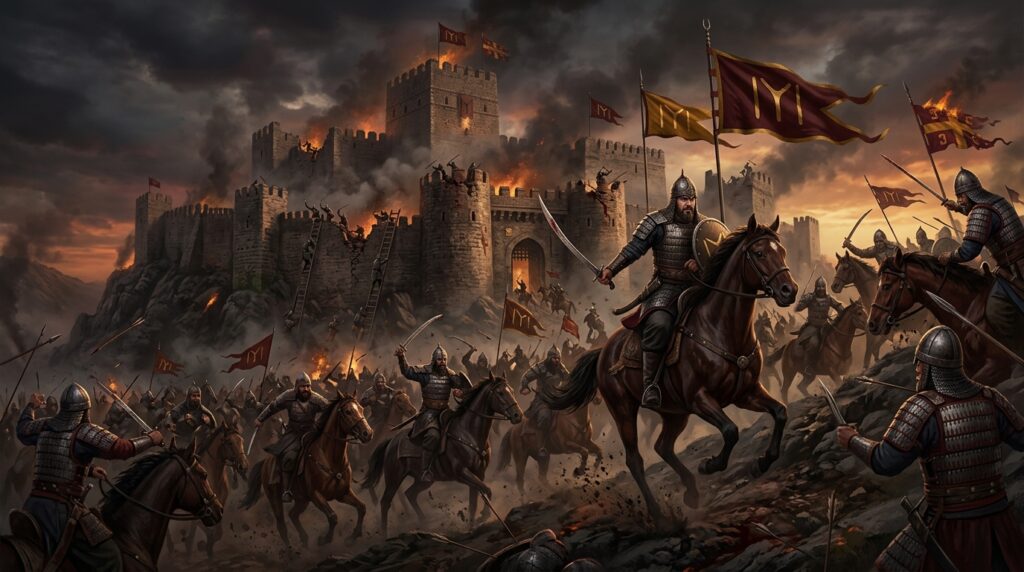
Osman wasted not a single day. After his father’s death, he immediately began expansion: war after war, conquest after conquest. He defeated Byzantine armies. He united more tribes. He made alliances with neighboring Muslim rulers. And slowly, what was a small nomadic tribe, a few thousand people, became a powerful state, the foundation of a great empire the world would ever see.
Then, in 1299, after his father’s death, Osman declared independence from the Seljuk Sultanate. He laid the foundation of the Ottoman Empire, an empire that would last 600 years, rule three continents, and shape a whole new world.
And all this began with a nomadic warrior whose name was Ertugrul.
The empire he never saw
In 1299, Osman Ghazi declared independence. The Ottoman Empire was born. What began in the Central Asian fields as a small Kayi tribe’s tents became a state that would last 600 years, rule three continents, control the Mediterranean, and shape a whole new world. All because one man, Ertugrul Ghazi, never gave up, never surrendered, and never stopped believing in something bigger than himself.
Ertugrul never saw an empire. He never saw a sultan on a throne, or a fleet on the Mediterranean, or a capital at Constantinople. He saw a tribe, a frontier town, and a son holding his hand at the end.
That was enough. Because the empires that last are not always started by the men whose names are on them. Sometimes they are started by the man who simply refuses to quit, and raises a son who refuses to stop.
Read also: The Entire History of the Ottoman Empire: Origins, Osman Gazi, and the First Victories
Read also: The Seven Sons of Orhan Gazi The Survivor Who Built the Ottoman Empire