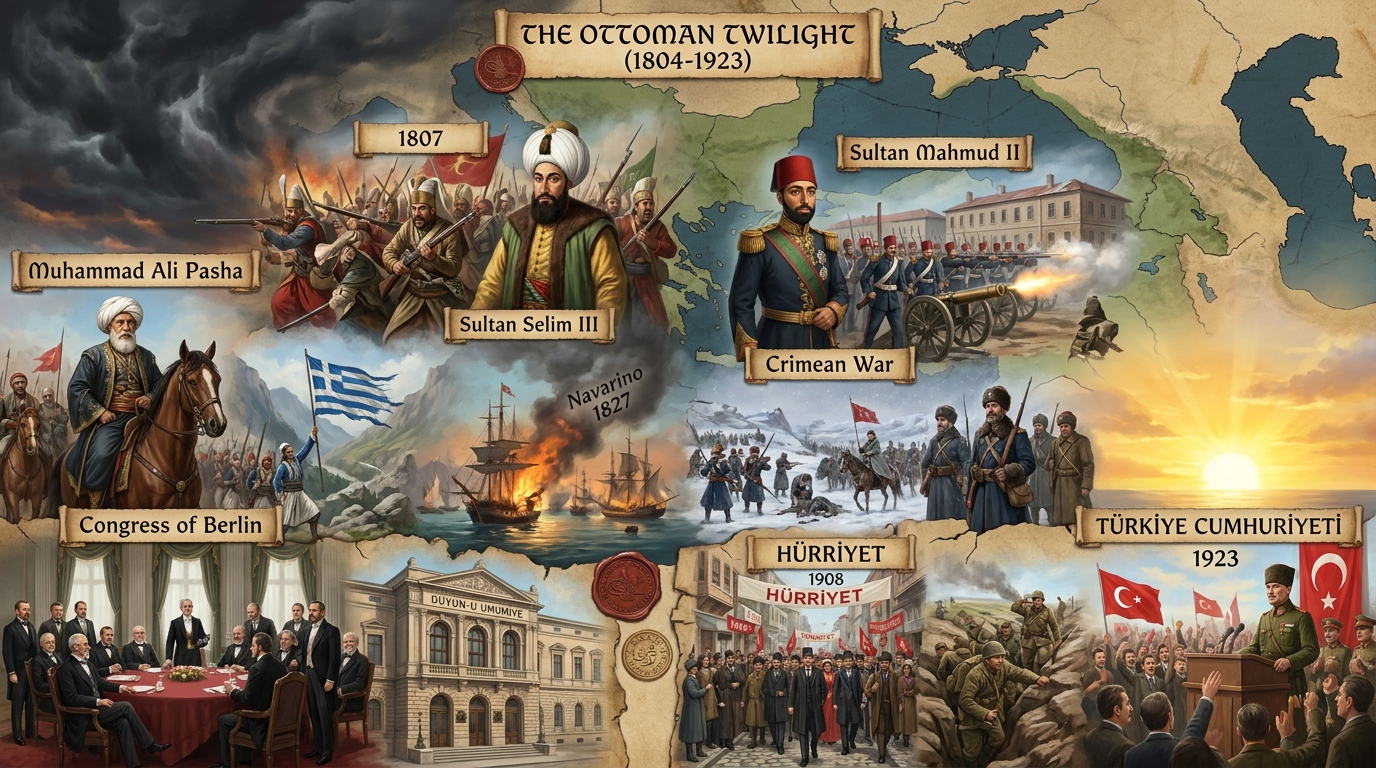
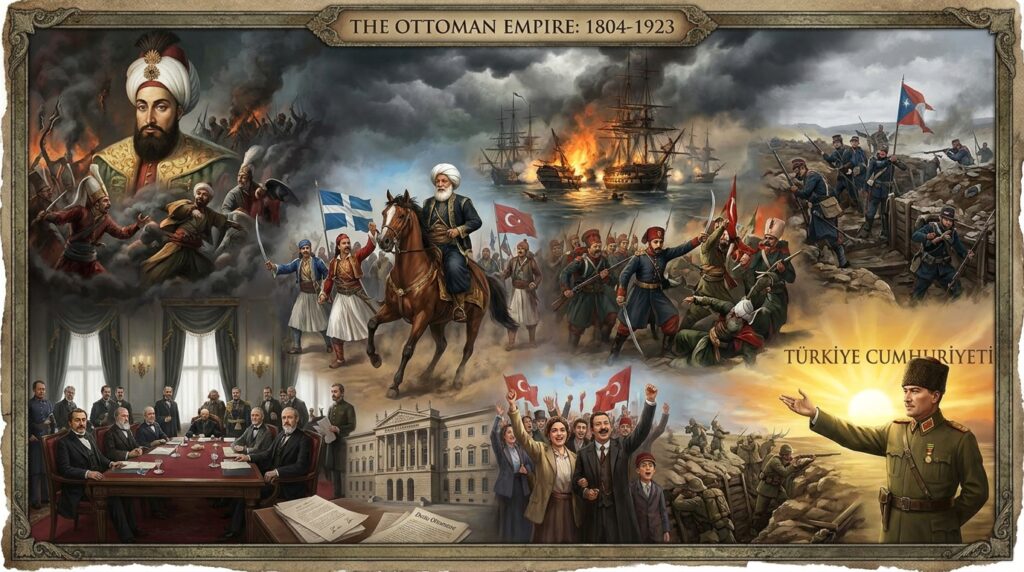
The Ottoman Empire did not die because it refused to change. It died while changing, constantly, for a hundred years. Between 1804 and 1923, the sultans reformed the army, the law, the schools, the taxes, and the constitution. Almost every reform worked on its own terms. And almost every reform created the force that would eventually destroy the empire. This is the story of that paradox: five reforms, five backfires, and a republic born from the wreckage.
The patient is diagnosed, 1804 to 1826
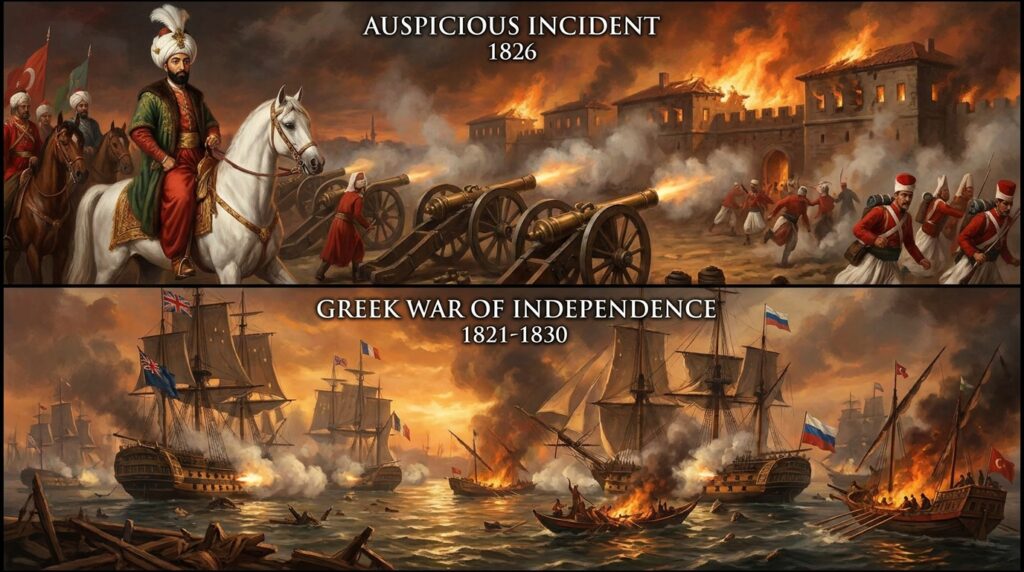
By 1804 the empire was already shrinking. Serbia revolted that year, the first crack in the Balkans. Greece followed in 1821 and was independent by 1829, backed by Britain, France, and Russia. Algeria was lost to France in 1830. Europeans began calling the empire the sick man of Europe, a label popularized by Tsar Nicholas I of Russia in 1853, and it was politically useful: if the patient was dying, its lands were free to divide.
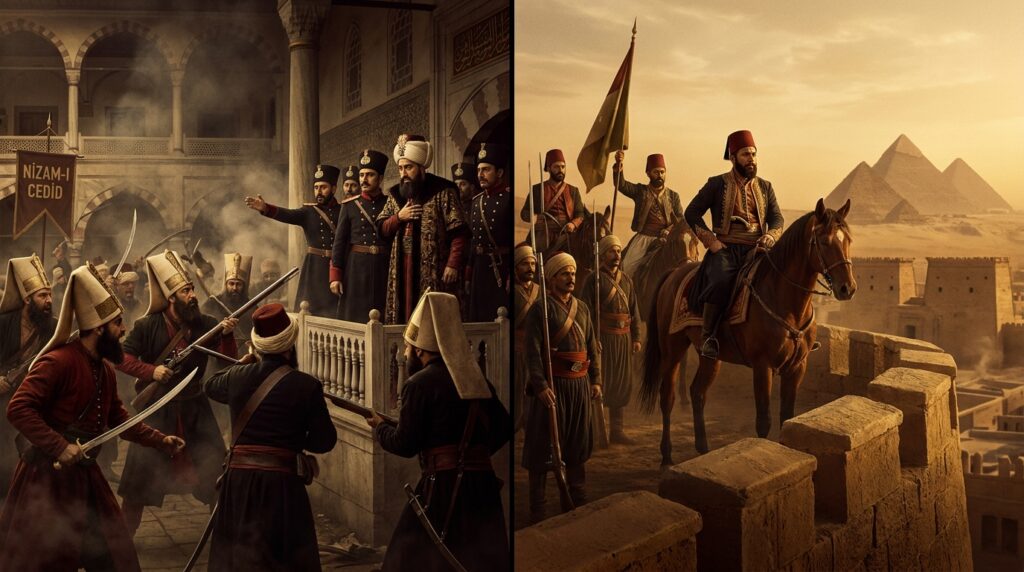
The first great reformer was Sultan Mahmud II. His target was the Janissaries, the elite corps that had become a conservative power bloc blocking every change. In 1826, in the Auspicious Incident, he destroyed them. It was brutal and it was necessary for a modern army. But it also removed the old army before a new one was ready, and it taught every later reformer the same lesson: reform in this empire would come from above, by force, and it would make enemies at home.
Tanzimat: equality that fed nationalism, 1839 to 1876
The Tanzimat, meaning reorganization, ran from the Edict of Gulhane in 1839 to 1876. The program promised a modern military, regular taxation with tax farming abolished, and equality of all subjects before the law regardless of religion. The language was deliberately gentle, to avoid alarming conservatives, but the intent was radical: a state where a Christian and a Muslim stood equal.
It backfired in a way nobody planned. Equality before the law, combined with European powers claiming the right to protect Ottoman Christians, gave separatist movements a language and foreign sponsors. Serbia, Romania, and Bulgaria moved toward independence or autonomy in the 1860s and 1870s. The reforms meant to keep Christians loyal helped them leave instead. Meanwhile the money for modernization came from European loans, and the debt grew until the empire could not pay it.
Bankruptcy and the creditors take over, 1877 to 1882
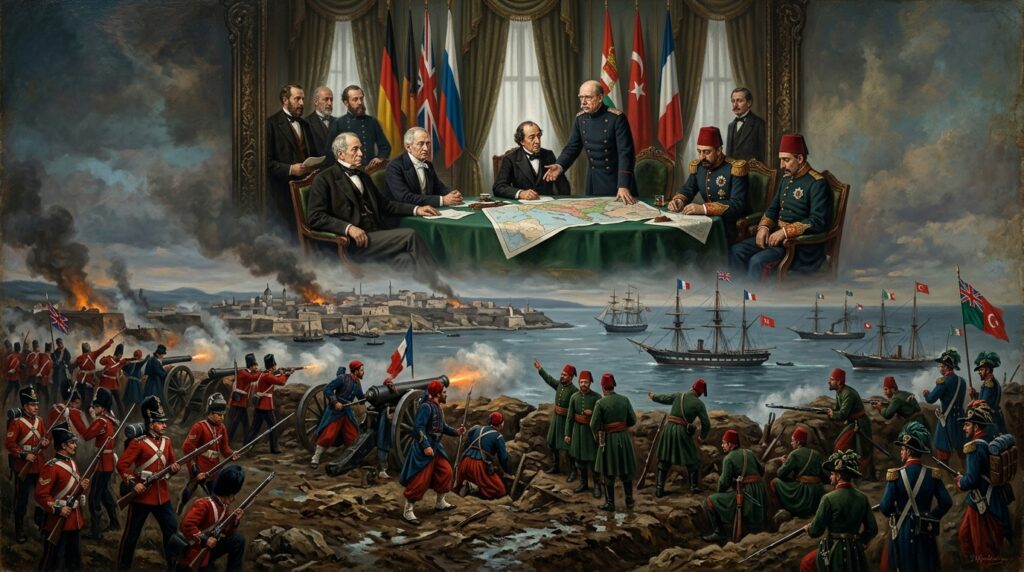
The war of 1877 to 1878 ended with Russia forcing the Ottomans to sign the Treaty of San Stefano, which transformed the Balkans. A large Bulgarian state, a Russian client, would have given Russia access toward the Black Sea ports, which Britain did not like, because Britain did not want to see Russia expand into the Black Sea. Months later the Congress of Berlin rearranged the map again: Romania, Serbia, and Montenegro became fully independent; Austria-Hungary took Bosnia and Herzegovina; Bulgaria became a semi-autonomous state; and separate deals gave Britain Cyprus, France Tunisia, and Greece new territory.
To make matters worse for the Ottomans, in 1881 the great powers created the Ottoman Public Debt Administration to ensure the empire would never default on its loans. The OPDA took over a large part of the Ottoman economy and set up monopolies on products such as tobacco and salt, so that foreign investors would get their money back. To add insult to injury, when the British took Egypt in 1882, officially to protect the Suez Canal from revolt, but also so they could take it, the Ottoman sultanate had no choice. This was one of the few large Muslim states in the world, and the sultan was the caliph, the latest in the line of succession to the Prophet Muhammad and the spiritual leader of Islam.
Abdulhamid: schools, railways, and spies, 1876 to 1908
The Ottomans wanted to keep their position, and for that Sultan Abdulhamid II tried to remake the state so it could be defended. He suspended the constitution of 1876 and ruled directly, but his reign also brought wide educational reforms, including general education, and railway building, including the Hejaz railway. At the same time he built an interventionist state apparatus: censorship, and a surveillance network that grew through secret societies working inside and outside the empire. The most notable opposition groups were the Committee of Union and Progress and the Young Turks. Abdulhamid’s schools had educated the very officers who would overthrow him.
The Young Turks and the last backfire, 1908 to 1923
The Young Turk revolution began in Macedonia in 1908, aiming to stop the Balkan provinces from being divided by the great powers and to restore the 1876 constitution. Taking advantage of internal divisions, Bulgaria declared independence, Greece took Crete, and Austria-Hungary formally annexed Bosnia and Herzegovina, although these were already under its control.
The revolution succeeded to a point, and the sultan accepted the Young Turks’ demands before more damage was done. But matters did not settle quickly, because the next year a counter-revolution began by officers who were more religiously conservative. The revolt failed. Abdulhamid II was blamed and later deposed in favor of his brother Mehmed V.
The new sultan, with important reformers such as Ismail Enver, tried to unite and strengthen the empire. These reforms went quite well at first, but then disaster struck again, this time in the form of a war, which Italy started by attacking the Ottoman province of Tripoli, now known as Libya, in 1911. The Italians easily succeeded, taking the North African regions and islands.
From there the chain ran to its end: the Balkan Wars of 1912 and 1913 stripped away almost all remaining European territory; the First World War, fought beside Germany and Austria-Hungary, ended in defeat and occupation; and the partition plans of Britain and France pushed Turkish nationalists under Mustafa Kemal into the War of Independence. The Treaty of Lausanne in 1923 recognized a new state, and on 29 October 1923 the Republic of Turkey was proclaimed. The reforms had failed to save the empire. But the last reformers, the nationalist officers the reforms themselves had educated, built the republic from its remains.
Read also: Mehmed II After 1453: The Conquests History Forgot
1 thought on “The Ottoman Empire: Decline, Reform, and the Birth of Modern Turkey (1804-1923)”